
Business associates do not need HIPAA certification to comply with the law, but they are required to train their workforce on privacy and security requirements, and certification through testing can support verification of that training and provide assurance to customers. HIPAA establishes obligations for protecting protected health information and requires organizations to ensure that workforce members understand and follow relevant policies and procedures. There is no formal government-issued certification requirement under HIPAA, but organizations must be able to demonstrate that appropriate training has been provided. Many business associates choose to implement certification through training assessments to confirm workforce understanding and document completion. The healthcare industry best practice is to provide HIPAA training annually to maintain awareness of regulatory requirements and support consistent compliance across the workforce.
Legal Requirement for Training
HIPAA requires business associates to train workforce members on how to handle protected health information, but it does not require formal certification as a condition of compliance. Training obligations arise from the requirement to implement policies and procedures and ensure that workforce members can carry out their functions in accordance with those requirements. Organizations must ensure that staff understand how to apply privacy and security rules in daily operations. Certification is not mandated, but training must be sufficient to support compliance with regulatory standards. Documentation of training completion is necessary to demonstrate that workforce education requirements have been met.
HIPAA Certification Through Staff Training
Although certification is not required by law, training programs that include testing and certification provide a method for verifying workforce understanding. Certification demonstrates that employees have completed training and have been assessed on their knowledge of HIPAA requirements. This can provide confidence to customers of the business associate, particularly covered entities that rely on the organization to protect protected health information. Certification also supports internal accountability by establishing measurable outcomes for training programs. Organizations that use certification can more easily demonstrate compliance during audits or contractual reviews.
Business Associate Agreements and Certification Expectations
Business associate agreements may include provisions that require training and certification for all workforce members who handle protected health information. Covered entities often include these requirements to ensure that business associates maintain a trained workforce capable of meeting compliance obligations. In these cases, certification becomes a contractual requirement rather than a regulatory one. Business associates must review agreement terms to determine whether certification is required and ensure that training programs meet those expectations. Failure to meet contractual training requirements can result in compliance issues beyond regulatory enforcement.
Annual Training as Industry Best Practice
Providing HIPAA training on an annual basis is a widely accepted practice within the healthcare industry. Annual training reinforces workforce understanding of privacy and security requirements and addresses changes in policies, systems, and risks. Regular training ensures that employees remain aware of their responsibilities and continue to apply safeguards correctly. Organizations that follow an annual training schedule are better positioned to maintain compliance and demonstrate ongoing workforce education. This approach supports consistent handling of protected health information across all operational areas.
HIPAA Training for Business Associate Employees
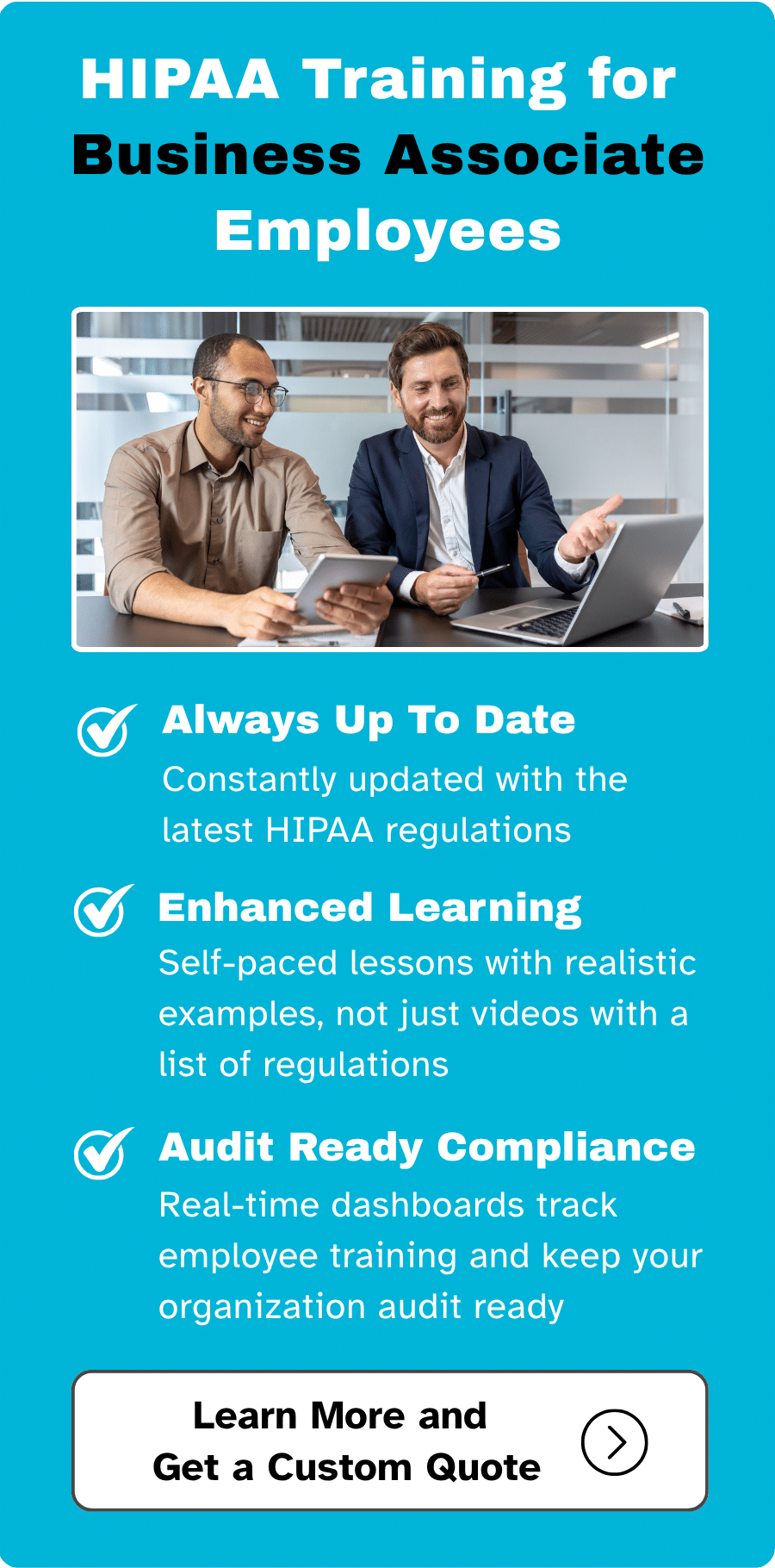
The HIPAA Journal’s HIPAA Training for Business Associate Employees provides structured instruction on HIPAA Privacy Rule and HIPAA Security Rule requirements, along with assessments that can support certification of workforce knowledge. The program covers handling of protected health information, application of safeguards, and operational practices relevant to business associate environments. It is designed to support both initial training and ongoing annual education, helping organizations maintain a trained workforce that understands compliance obligations.