
The top-rated HIPAA certification for you is the Accredited HIPAA Certification from The HIPAA Journal because it gives you online training on the HIPAA Privacy Rule, HIPAA Security Rule, and HIPAA Breach Notification Rule, assesses your understanding through lesson-based quizzes, and issues a certificate of completion that you can use for hiring, onboarding, and workforce training records.
If you want a certification course, the Accredited HIPAA Certification from The HIPAA Journal is online, comprehensive, and suitable for onboarding and annual refresher training. You can access the course on a phone, tablet, laptop, or desktop device and complete the lessons on your own schedule.
HIPAA Certification Course Curriculum
The course curriculum gives you a structured foundation in HIPAA requirements through a set of mandatory modules that move from general rule awareness into day-to-day workforce responsibilities. You start with an introduction to HIPAA training, why the training is provided, and how to apply it in practice. The mandatory curriculum then covers the HIPAA Privacy Rule, HIPAA Security Rule, and HIPAA Breach Notification Rule, followed by staff-focused compliance instruction, patient rights under the HIPAA Privacy Rule, HIPAA authorization, device, credential, and email security, recent HIPAA updates, disclosure guidelines, and threats to patient data. Each mandatory module includes a multiple-choice quiz, and you receive your certificate after you complete all modules and pass all required assessments. If you work in Texas or California, you can also complete state-specific optional modules on medical privacy and security laws that affect healthcare workforces in those states.
Optional HIPAA Modules
After you complete the mandatory learning and receive your certificate, you can continue into additional reference and advanced modules that expand the curriculum beyond baseline rule coverage. Those modules include the roles of HIPAA compliance, privacy, and security officers, reasons healthcare information must remain confidential, everyday causes of unintentional HIPAA violations, and a terminology reference for HIPAA-related terms and abbreviations. The advanced content also covers artificial intelligence in healthcare, best practices for AI use in compliance with HIPAA, social media risks, consequences of HIPAA violations and breaches, and HIPAA in emergency situations. That structure gives you both the required training needed to earn the certificate and a broader set of topic-specific modules that address workplace judgment, newer risk areas, and operational issues that affect how protected health information is handled.
Four Steps to Receive Your HIPAA Certification
The first step is to access the course on your device after enrollment. The second step is to complete the lessons at your own pace with pause-and-resume access, which allows you to finish the training in one sitting or across multiple sessions. The third step is to complete the short quiz at the end of each lesson, with retakes available until you achieve a passing score. The fourth step is to receive your HIPAA certificate after all required modules and assessments are completed successfully.
That process works well if you need certification for a new role, a job application, pre-employment screening, or onboarding. Your certificate is issued when the course requirements are complete, so you can retain it for your records and provide it when requested.
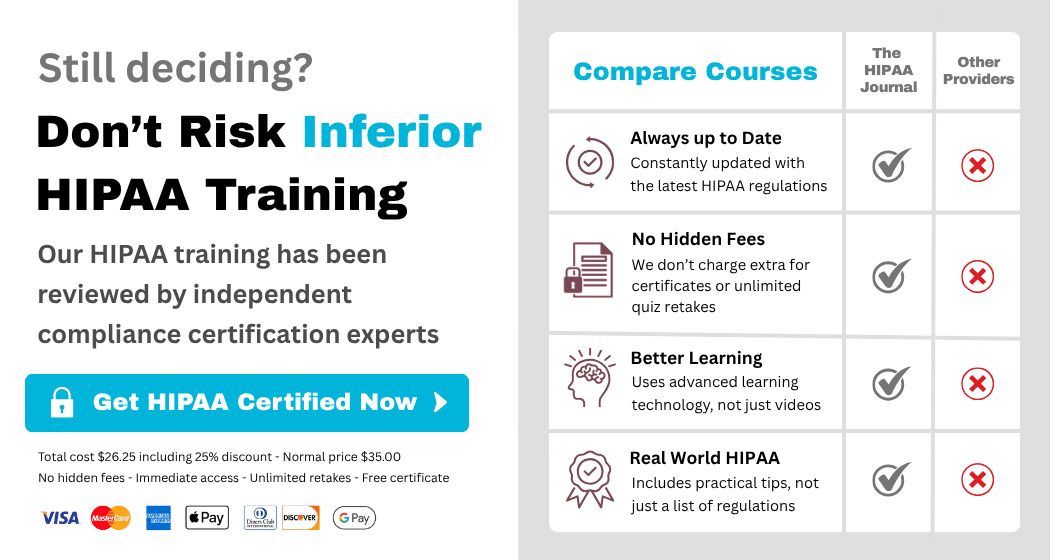
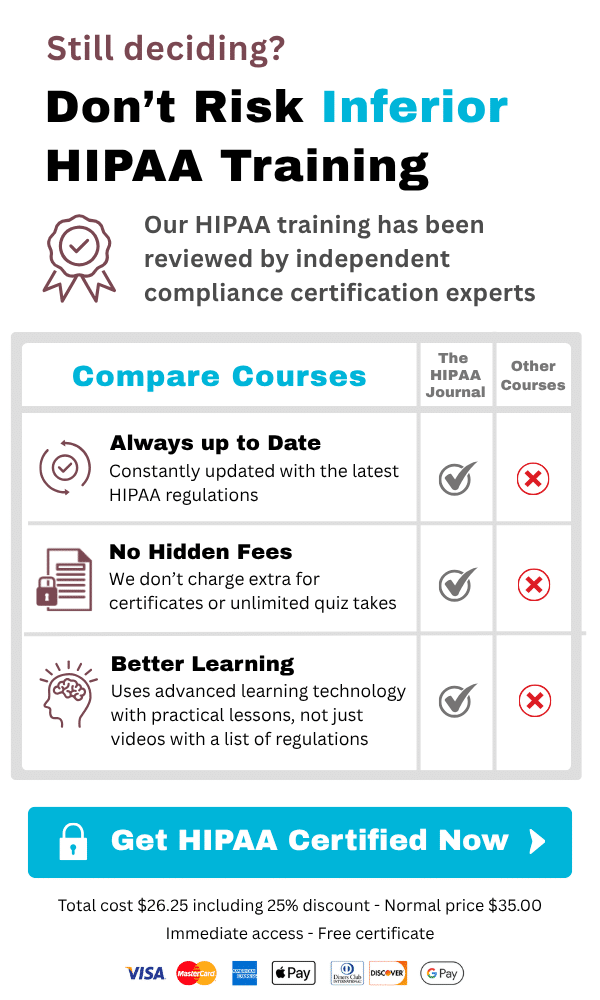
The HIPAA Journal is the leading source of HIPAA news and advice and a highly reputable brand to have on your resume. When you add certification from The HIPAA Journal to your resume, you connect your training record to a name associated with HIPAA reporting, compliance education, and practical guidance for regulated organizations.