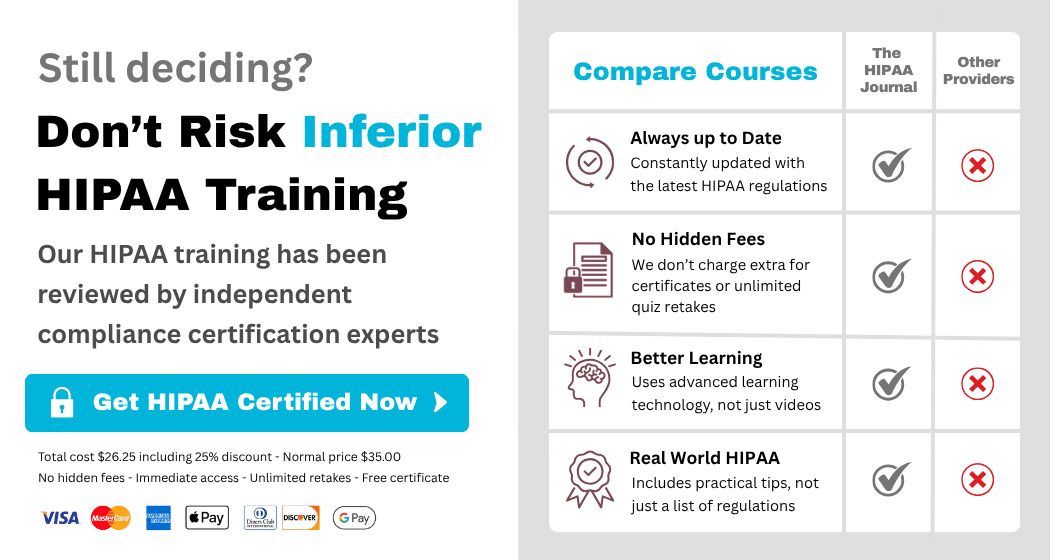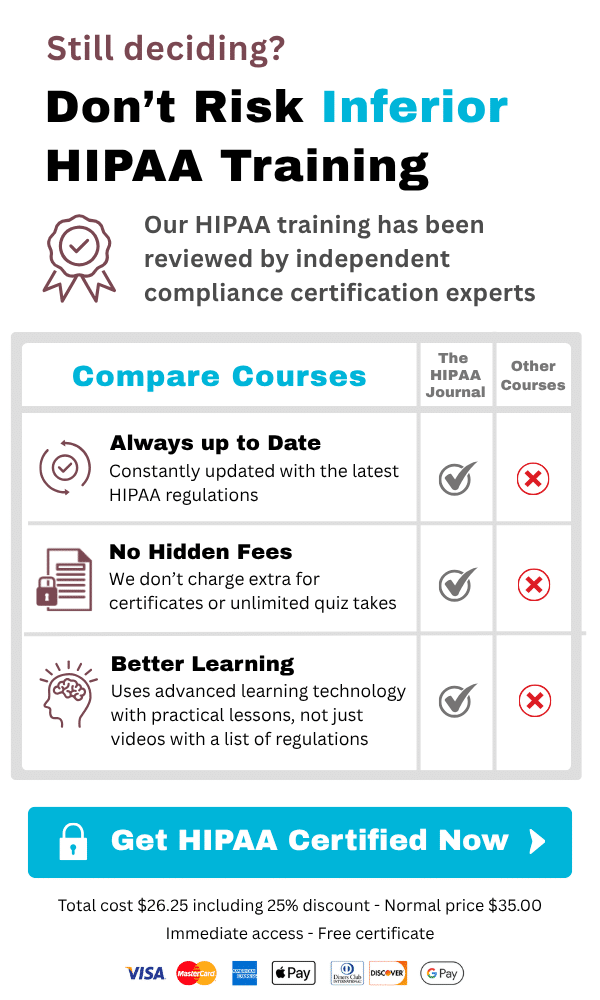

You can get HIPAA certification online through the Accredited HIPAA Certification from The HIPAA Journal, which gives you formal training on the HIPAA Privacy Rule, HIPAA Security Rule, and HIPAA Breach Notification Rule, tests your knowledge through lesson-based assessments, and issues a certificate of completion that you can use for job applications, onboarding records, and workforce training documentation. If you want a course that is built for individual learners and workplace readiness, the Accredited HIPAA Certification from The HIPAA Journal is a strong option. The training is online, comprehensive, and suitable for onboarding and annual refresher training. You can access it on a phone, tablet, laptop, or desktop device, which makes it practical to complete around work, study, or a job search.
The course gives you rule-based instruction first. You start with the federal HIPAA framework so you understand how protected health information must be used, disclosed, safeguarded, and reported. That foundation matters because a certificate has more value when the training covers the actual HIPAA rules and regulations before you move into employer-specific procedures. The learning content also addresses routine workplace situations. You study patient rights, disclosure decisions, device and email security, incident reporting, threats to patient data, and newer exposure areas such as artificial intelligence tools and social media. That gives you training that reflects daily compliance work rather than a narrow review of terminology.
Texas and California Medical Privacy Rules
Texas and California impose additional state medical privacy and security requirements on top of federal HIPAA obligations, so workforce members in those states need training that covers both the HIPAA regulatory framework and the state laws that affect day-to-day handling of protected health information. Staff in Texas should complete training on Texas state medical privacy and security regulations, and staff in California should complete training on California state medical privacy and security regulations, because those state rules overlay HIPAA and create added compliance duties for healthcare workforces. A sound training sequence starts with HIPAA rules and regulations to establish baseline knowledge, then adds the applicable state-law module so personnel understand the extra legal requirements that apply in Texas or California. This training is provided as a free optional extra in the Accredited HIPAA Certification from The HIPAA Journal.
Steps to Get HIPAA Certification
- The first step is to enroll in the course and set up your learner access. Once your registration is complete, you can enter the training platform and begin the lessons from any online device.
- The second step is to complete the course modules at your own pace. You can move through the material in one sitting or return to unfinished lessons later. The training platform allows you to pause and resume without losing your progress.
- The third step is to finish the short quiz attached to each lesson. Your understanding is checked as you move through the course rather than through a single final exam. If you need another attempt, you can retake a quiz until you reach a passing score.
- The fourth step is to get your HIPAA certificate after all required modules and assessments are completed successfully. The certificate is issued immediately on completion, which allows you to retain it for your records without delay.
Put the HIPAA Certification on Your Resume
HIPAA certification is useful when you want to show employers that you completed formal training on HIPAA rules and regulations before starting a healthcare, administrative, billing, support, or vendor role. You can include the certificate on your resume, in application materials, or in pre-employment documentation when a hiring manager asks for proof of training.
The HIPAA Journal is the leading source of HIPAA news and advice, and it is a highly reputable brand to have on your resume. When you list a HIPAA certificate from The HIPAA Journal, you connect your training record to a name associated with HIPAA reporting, compliance education, and practical guidance on privacy and security issues.