
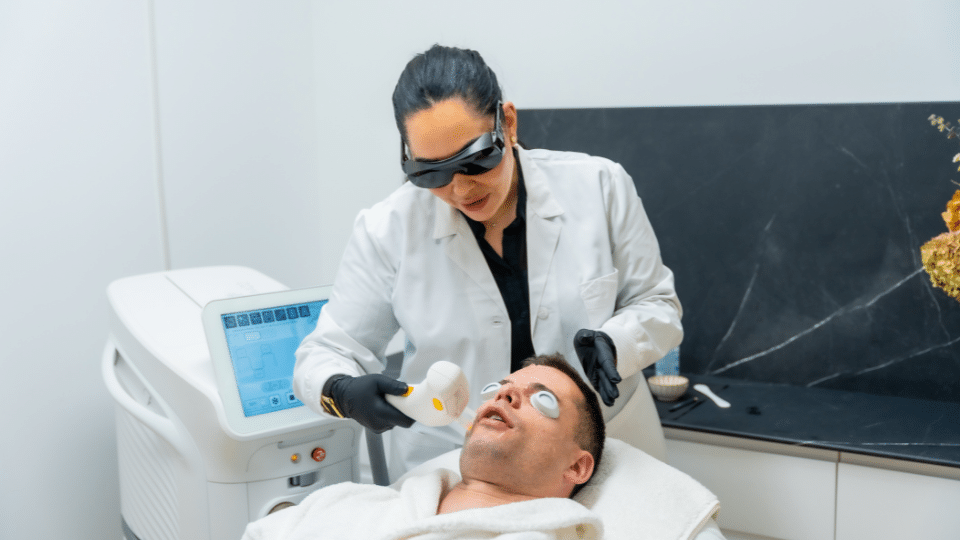
Dermatology practices that transmit protected health information electronically in connection with standard transactions qualify as HIPAA Covered Entities and must provide every workforce member with training on the Privacy Rule, the Security Rule, and the Breach Notification Rule before that individual accesses patient records, and must repeat that training annually as the accepted standard across the healthcare sector. The training obligation applies to every role in a dermatology practice, including dermatologists, physician assistants, medical assistants, front desk personnel, billing coordinators, and any aestheticians or cosmetic procedure staff whose work involves patient identifiers or clinical records. Dermatology generates PHI in formats that require specific compliance handling, from digital dermoscopy images and biopsy pathology reports to before-and-after photographs used in both clinical documentation and patient marketing materials, and training that does not address those formats leaves workforce members without the guidance the Privacy Rule requires them to have.
Privacy Rule Training Obligations in Dermatology
Privacy Rule training in a dermatology practice must cover the permitted and required uses and disclosures of protected health information, the minimum necessary standard that limits PHI access to what each role requires, and the patient rights that govern how individuals may access, amend, and restrict their own records. Dermatology practices face a specific compliance challenge that general Privacy Rule training does not address: the distinction between medical records and cosmetic procedure records. Some patients receive both medical dermatology services and elective cosmetic treatments from the same practice, and the documentation created for each type of encounter carries the same HIPAA protections even where the patient may not perceive the cosmetic consultation as a clinical interaction. Staff must understand that all records created in connection with a covered transaction are protected health information regardless of whether the underlying service was medically necessary or elective.
Patient Photography and PHI Disclosure in Dermatology
Patient photography is a routine clinical and administrative activity in dermatology, used for tracking skin conditions, documenting treatment progress, and in some practices, supporting marketing materials that show procedural outcomes. A photograph that identifies a patient and relates to their treatment constitutes PHI under the Privacy Rule, and its use in any context outside permitted treatment, payment, and healthcare operations purposes requires a valid written authorization that meets the Privacy Rule’s content requirements. Staff who use patient images for social media posts, website galleries, or before-and-after promotional content without a compliant authorization create direct Privacy Rule violations, and training must address that boundary in practical terms. The distinction between a photograph taken as part of a clinical record and one used in marketing is a compliance decision that administrative and clinical staff encounter without the involvement of a compliance officer, making pre-task training on this issue a regulatory necessity rather than an optional enhancement.
Security Rule and Small Practice Compliance Requirements
The Security Rule requires dermatology practices to implement security awareness training for all workforce members who access systems storing or transmitting electronic PHI, including electronic health record platforms, digital imaging systems, patient portals, and practice management software. Small dermatology practices operating with compact staff teams face compliance challenges specific to their size: open treatment areas where patient conversations may be overheard by other patients, shared workstations used by multiple staff members across a single shift, and informal communication habits that develop when staff handle both clinical and administrative functions simultaneously. Security training in this environment must address credential sharing risks, the handling of portable devices that contain ePHI, safe messaging practices for communications with patients and referring providers, and the correct procedure for reporting a security incident when no dedicated IT staff member is available to receive the report.
Onboarding Timing and Annual Refresher Requirements
The Privacy Rule requires training to be provided within a reasonable period after a new workforce member joins the practice and before they access PHI in any form. The Security Rule requires security awareness training for all existing workforce members on an ongoing basis, which regulators and compliance professionals consistently interpret to mean at minimum annual retraining. A dermatology practice that trains new hires at onboarding but does not repeat training annually leaves workforce members operating on knowledge that may not reflect current regulatory guidance, updated security risks, or changes to the practice’s own policies and procedures. Additional training is also required whenever a material change to policies or procedures affects how a workforce member carries out their functions, such as a transition to a new electronic health record system, a change in how patient photographs are stored, or an incident that reveals a gap in staff understanding of disclosure rules.
HIPAA Training for Dermatology Practices
HIPAA Training for Dermatology Practices from The HIPAA Journal covers the mandatory Privacy Rule, Security Rule, and Breach Notification Rule content through modules that use real-world scenarios drawn from dermatology and small medical practice settings, including the compliance challenges that arise in practices where staff manage both medical and cosmetic services, handle patient photography as a clinical tool, and operate with lean administrative teams that combine multiple functions. The course includes dedicated modules on the compliance challenges specific to small medical practice environments, Section Two modules on generative AI risks in clinical workflows and social media use, and optional free modules covering Texas and California state medical privacy regulations for practices in those states. Training is delivered through a self-paced online learning management system accessible on any device, and awards an accredited certificate with 5.0 CEUs from the Compliance Certification Board on completion of all mandatory modules and assessments, producing a dated training record for each staff member that satisfies HIPAA’s six-year documentation retention requirement.