
HIPAA compliance officer certification is most commonly documented through completion of a HIPAA training certificate course that covers all aspects of HIPAA rules and regulations and also includes compliance officer responsibilities as a dedicated topic.
Accredited HIPAA Certification from The HIPAA Journal
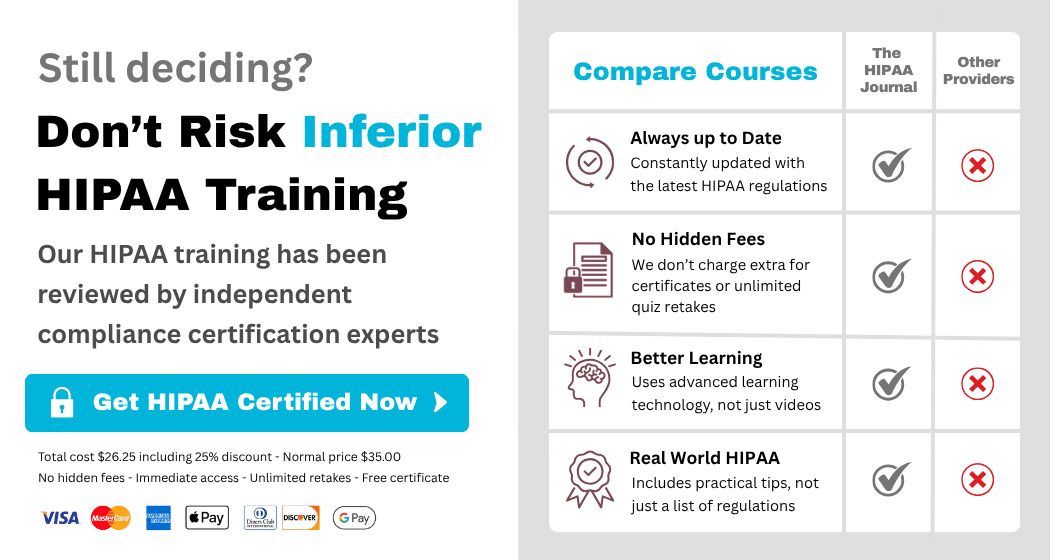
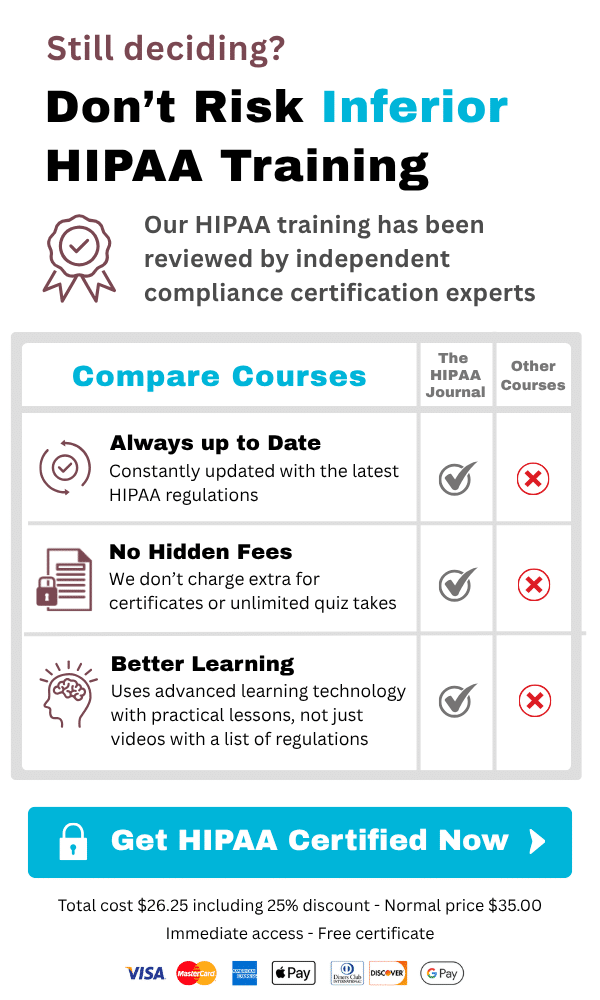
Accredited HIPAA Certification from The HIPAA Journal is an online, comprehensive course suitable for onboarding and annual refresher training. The course is delivered through a learning management system that you can access on-demand from a desktop computer, mobile phone, or tablet, and it is structured around mandatory HIPAA training modules with a short quiz after each module.
The curriculum includes core modules that cover the HIPAA Privacy Rule, HIPAA Security Rule, and HIPAA Breach Notification Rule, along with practical modules on workforce compliance behaviors, incident reporting, patient rights under the HIPAA Privacy Rule, disclosure decision-making, and safeguarding electronic protected health information through device, credential, and email practices. The course also includes content addressing emerging risk areas referenced in the course materials, including generative AI tools and social media.
Earn 5 CEUs from the HCCA Compliance Certification Board
The Accredited HIPAA Training from The HIPAA Journal qualifies for 5.0 continuing education units (CEUs) from the Compliance Certification Board, which adds direct professional development value for individuals working in HIPAA compliance and broader healthcare compliance roles. For a HIPAA compliance officer pursuing professional qualification, those continuing education units can support ongoing credentialing activity while also documenting focused instruction on the HIPAA Privacy Rule, HIPAA Security Rule, HIPAA Breach Notification Rule, workforce responsibilities, disclosure standards, security practices, and operational compliance issues. That makes the course useful not only as training on HIPAA requirements, but also as part of a documented CEU for professionals building or maintaining compliance credentials in the healthcare sector. The Health Care Compliance Association is widely recognized in the healthcare compliance field, so continuing education tied to its certification framework carries professional weight for compliance officers who want training that contributes to both job knowledge and formal professional development.
Content that Supports Compliance Officer Functions
The course includes an additional reference and advanced module titled What is a HIPAA Compliance Officer, which describes the roles and responsibilities of HIPAA Compliance, Privacy, and Security Officers and how those functions support HIPAA compliance. That module fits common compliance officer duties such as coordinating HIPAA training records, supporting policy communication, assisting with escalation pathways for suspected incidents, and reinforcing consistent handling of protected health information across the workforce.
The broader curriculum supports compliance officer work by connecting rule requirements to operational decisions that generate privacy and security exposure, including how disclosures are evaluated, how incidents are reported, and how workforce actions affect electronic protected health information.
Four Step Certificate Process
You access the training course on a device such as a mobile phone, laptop, desktop, or tablet. You use pause-and-resume lessons to complete the training around your schedule. You complete a short quiz at the end of each lesson, with retakes permitted until you achieve a passing score, and there is no exam at the end. Your certificate is issued immediately after you complete the lessons and pass the quizzes.
Certificate Verification and Documentation Controls
The course provides a certificate verification process that sends confirmation to an email address you specify when authenticity confirmation is needed for hiring, onboarding, or file validation. For compliance program documentation, retain the certificate and completion date and align those records with workforce training tracking practices used by the organization.