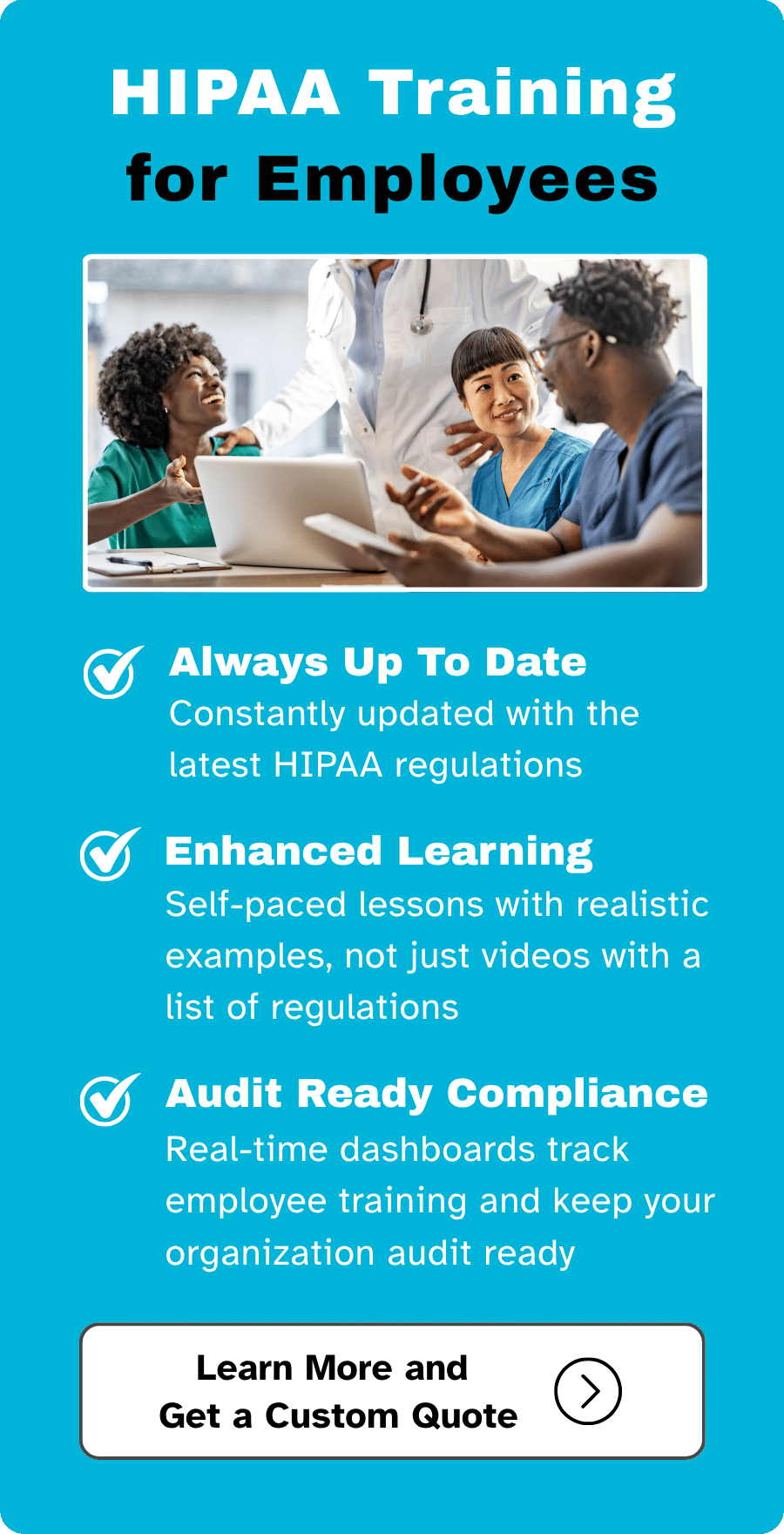

The HIPAA Journal’s HIPAA Training for Employees is different from competing HIPAA courses because it was built by the organization that has reported on HIPAA violations, enforcement actions, and healthcare data breaches in greater depth and over a longer period than any other publication in the field, and that accumulated knowledge is embedded directly in the training content rather than used as background context for a course developed through a generic instructional design process. Most HIPAA training programs are written from the regulations outward, summarizing what the rules say and presenting that summary as employee education. The HIPAA Journal’s approach works from the breach data inward, identifying the decisions, behaviors, and misunderstandings that produce violations in practice and building training around those specific failure points. The result is a course that prepares employees for compliance situations they will actually encounter rather than the regulatory provisions they will rarely need to recite.
Content Grounded in Real Enforcement Outcomes
Over more than a decade of reporting, The HIPAA Journal has analyzed thousands of data breach investigations, Office for Civil Rights enforcement actions, and criminal prosecutions of healthcare employees. That body of analysis identifies where HIPAA training consistently fails to prevent violations and what gaps in employee understanding most reliably precede a breach. The HIPAA Journal’s HIPAA Training for Employees incorporates that analysis into every module, using scenarios drawn from documented incidents to show employees how violations occur, what circumstances produce them, and what different decisions would have changed the outcome. This is not a course that tells employees HIPAA violations are serious. It shows them exactly how serious, through case studies grounded in real events.
Assessment That Confirms Understanding
Many HIPAA training programs issue a certificate upon completion of a course regardless of whether the employee demonstrated comprehension of the content. The HIPAA Journal’s HIPAA Training for Employees uses randomized lesson-by-lesson assessments that test understanding after each module, with unlimited retakes available until a passing score is achieved. That structure eliminates the possibility of an employee progressing through the course by clicking through slides and still receiving a certificate. Every certificate issued by the course represents a verified record that the employee engaged with the content and demonstrated the level of understanding the assessment required. That distinction matters in an Office for Civil Rights investigation, where the quality of training records is assessed alongside their existence.
Coverage That Reflects the Current Compliance Landscape
HIPAA training that was accurate at the time of publication but has not been updated to reflect regulatory developments, new HHS guidance, and emerging compliance risks does not prepare employees for the environment they are working in. The HIPAA Journal’s editorial team monitors regulatory changes, enforcement trends, and evolving workplace risks on an ongoing basis, updating the course when substantive changes affect what employees need to know. The course covers emerging compliance issues that many competing programs have not yet addressed, including the use of generative AI tools in the workplace, the compliance risks associated with messaging platforms not approved for PHI transmission, and social media conduct that creates HIPAA exposure. Optional modules covering California and Texas state medical privacy requirements are included at no additional cost for organizations whose employees need to understand how state laws interact with HIPAA obligations.
Delivery, Administration, and Compliance Infrastructure
The HIPAA Journal’s HIPAA Training for Employees is an online course accessible from any device, including mobile phones, tablets, and desktop computers, with self-paced delivery and pause-and-resume functionality that allows employees to complete training without disrupting patient care or operational schedules. Completion certificates are issued automatically on successful course completion. A real-time administration dashboard gives compliance managers current visibility into which employees have completed training, which have outstanding modules, and where assessment performance indicates areas that warrant follow-up, maintaining audit-ready records across the workforce at all times. The course is available in SCORM format for organizations operating their own learning management systems, and enterprise customization is available for organizations with specific operational or regulatory requirements.