
The HIPAA Omnibus Rule expanded HIPAA compliance requirements to include business associates by making them directly subject to the HIPAA Privacy Rule and HIPAA Security Rule and accountable for safeguarding protected health information. Before this rule, business associates were primarily governed through contractual obligations with covered entities rather than direct regulatory enforcement. The HIPAA Omnibus Rule changed this structure by requiring business associates and their subcontractors to implement privacy and security safeguards, maintain compliance programs, and meet breach notification obligations. This expansion increased regulatory oversight and introduced direct liability for violations involving protected health information. As a result, business associates must now maintain workforce training, documented policies, and operational controls that align with federal requirements. The healthcare industry best practice is to provide HIPAA training annually to ensure workforce members remain informed about current requirements and evolving risks.
Expansion of Compliance Responsibilities for Business Associates
The HIPAA Omnibus Rule established that business associates must comply with key provisions of the HIPAA Privacy Rule and HIPAA Security Rule, rather than relying solely on contractual agreements. Business associates are required to limit uses and disclosures of protected health information to permitted purposes, apply safeguards to protect data, and report breaches when they occur. Subcontractors that handle protected health information on behalf of business associates are also subject to these requirements. This creates a chain of compliance responsibilities across all entities that access or process protected health information. Organizations must ensure that their operational practices align with these obligations to maintain compliance.
Role of Business Associate Agreements in Training and Certification
HIPAA Business Associate Agreements may require HIPAA training and certification for all staff within the business associate organization. Covered entities often include these requirements to ensure that workforce members understand how to protect protected health information and comply with regulatory standards. Training and certification provide documented evidence that employees have been educated on privacy and security requirements and have demonstrated understanding through assessment. Business associates must review agreement terms to determine specific training expectations and ensure that all workforce members meet those requirements. Failure to comply with these provisions can affect contractual relationships and regulatory standing.
Workforce Training and Ongoing Education
The expansion of compliance obligations under the HIPAA Omnibus Rule requires business associates to maintain a trained workforce capable of applying privacy and security safeguards. Training must cover how to handle protected health information, apply access controls, and follow procedures for permitted uses and disclosures. Ongoing education reinforces these requirements and ensures that workforce members remain aligned with updated policies and system changes. Annual training is widely recognized as the standard practice within the healthcare industry because it supports continuous awareness and reduces the risk of non-compliance. Organizations that maintain consistent training schedules are better positioned to demonstrate compliance and manage operational risks.
HIPAA Training for Business Associate Employees Program
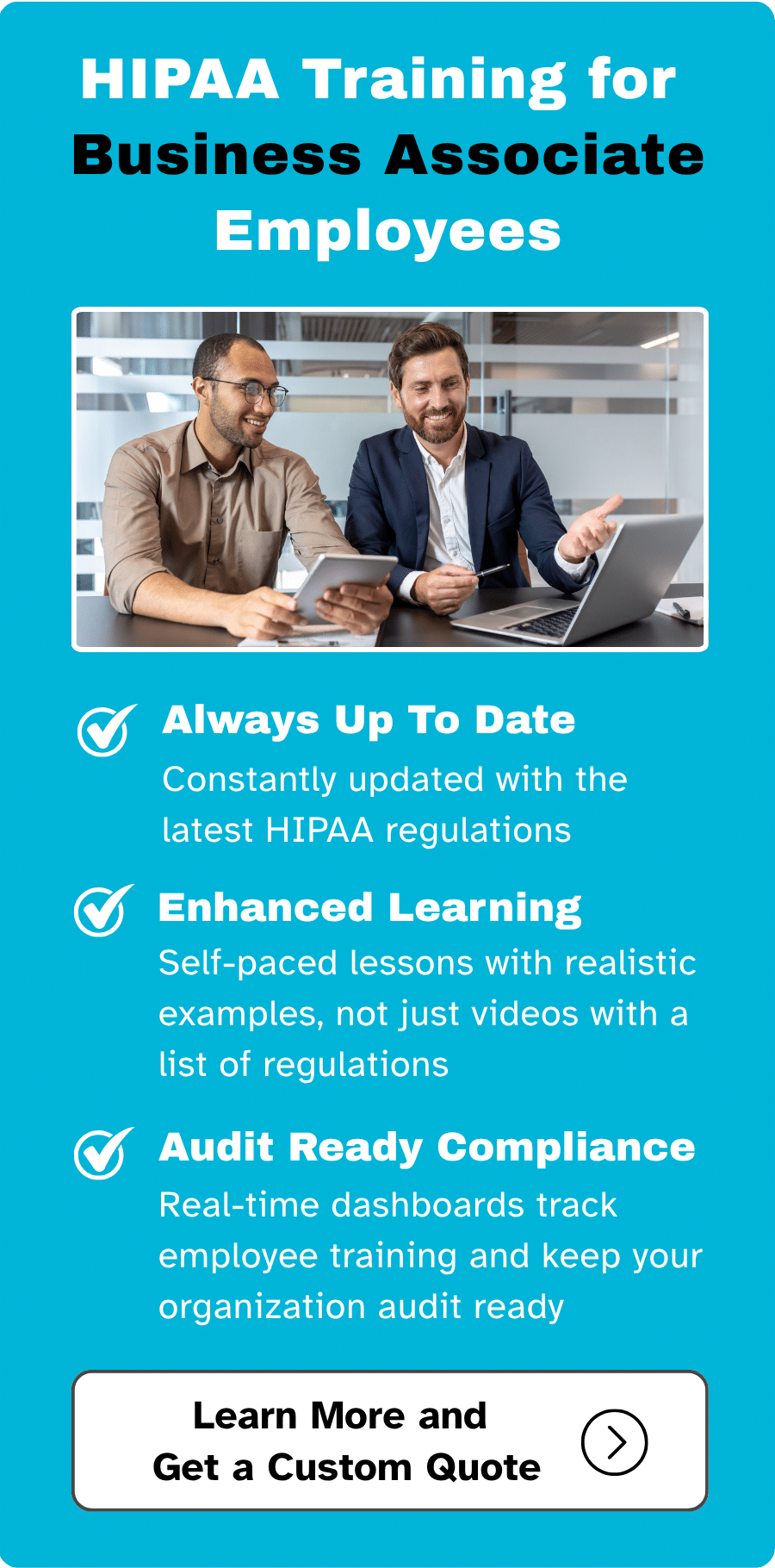
The HIPAA Journal’s HIPAA Training for Business Associate Employees provides a structured training program designed to address the specific needs of business associates operating under the HIPAA Omnibus Rule. The program includes detailed instruction on the HIPAA Privacy Rule and HIPAA Security Rule, focusing on how to handle protected health information in accordance with regulatory requirements. It incorporates real-world scenarios that reflect common business associate workflows, helping workforce members apply concepts in practical situations. The training includes assessments that evaluate understanding and support certification, which can be used to meet contractual requirements in business associate agreements. Delivered through an online platform, the program allows organizations to assign training, track completion, and maintain documentation for compliance purposes. This approach supports both initial workforce education and ongoing annual training practices.